As your business grows, so does the challenge of finding the right people. The right recruitment strategy can make all the difference in scaling fast. Needed to help you with niche roles. But how to implement the right strategy that works? You can make a choice from the most popular options, that is, contract Recruiter vs RPO. Most businesses today are using Contract Recruiters and Recruitment Process Outsourcing, depending on their business requirements.
Thinking, which one truly fits your business needs? The blog has all the details. We’ll break it down and help you decide.
Explain Contract Recruiter
An independent recruiter is hired temporarily to help companies meet short-term hiring goals. These professionals work as an extension of your HR team. They bring their own expertise and network to fill open positions. The specialized person hired is called a contract recruiter.
You can call them your hiring specialist. They’re someone who jumps in when you need extra support. But they don’t stay on the payroll permanently.
Advantages of Leveraging it
Working with a contract recruiter has many benefits. We’ve gathered some benefits of contract recruiters that make businesses rely on them:
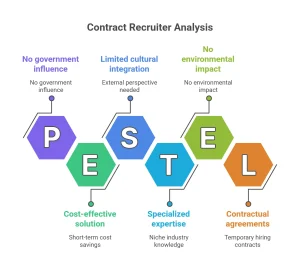
Flexibility: You can hire them for as long as you need. Hire them for weeks, months, or for a specific project.
Specialized Expertise: Many contract recruiters have niche experience in industries like:
- Tech
- Healthcare, or
- Engineering.
Quick Integration: Contract recruiters can start fast. They only need minimal training or onboarding.
Cost-Effective for Short-Term Needs: You pay only for the contract period. That means no long-term commitments or employee benefits.
Fresh Perspective: Often, external recruiters bring new sourcing ideas and insights to your hiring process.
Limitations of Contract Recruiters
Contract recruiters are efficient. But keep this in mind, they’re not perfect for every situation. The following are a few things to consider:
- Knowledge Leaves with Them: Any insights or processes they built leave too when the contract ends.
- Limited Scalability: Contract recruiters work best for small-scale hiring. They are not for mass recruitment drives.
- Less Cultural Integration: The contract recruiters are external. That’s why they might not fully capture your company culture.
- Potential Turnover: Contract recruiters can move on fast if offered better contracts elsewhere.
- You Manage the Process: With a contract recruiter, you’ll still need to monitor performance and handle onboarding logistics.
A contract recruiter can be a great fit only if you need someone to plug short-term hiring gaps. Their support helps find you specialized talent. For long-term needs? Try a scalable recruitment strategy. Go for another solution worth considering, which is RPO.
Explain the Recruitment Process Outsourcing
RPO goes beyond filling roles. It is implemented when a company partners with an external firm to manage part or all of its hiring process. This could include:
- Sourcing candidates
- Screening, interviewing
- Onboarding, and
- Workforce analytics.
Simply put, RPO is a strategic partnership. Recruitment process outsourcing helps companies streamline hiring. Greatly assist them in reducing costs and improving candidate quality when scaling up.
Benefits of Recruitment Process Outsourcing (RPO)
Partnering with an RPO provider brings powerful advantages. Discover what you’ll gain with RPO:
- Faster Hiring: RPOs cut hiring time with dedicated teams and tech tools.
- Consistent Processes: Having RPOs brings standardized recruitment workflows.
- Scalability: With RPO, you can easily ramp hiring up or down as your business needs change.
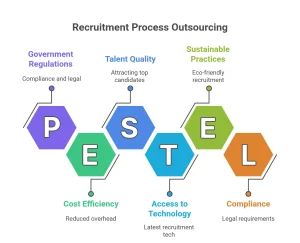
- Access to Technology: Get the latest in recruitment tech and analytics without the investment.
- Better Talent Quality: RPO teams specialize in attracting and assessing top-tier candidates.
- Cost Efficiency: RPO has a lower cost-per-hire and reduced overhead in the long term.
According to recent reports:
67 percent of companies using RPO have seen revenue growth compared to only 33 percent of non-RPO users. That’s a pretty compelling reason to consider it.
How RPO Works?
Usually, RPO providers start by understanding your business goals and culture. From there, they:
Map out your recruitment needs → volume, skill sets, and timelines.
Set up customized hiring workflows → using technology and analytics.
Source and screen candidates → through their established networks.
Manage the hiring lifecycle → from offer to onboarding.
Provide regular insights → to improve future hiring strategies.
The goal? To create a recruitment engine that runs smoothly and aligns with your brand.
Comparisons Between Contract Recruiters vs RPO
Both strategies help you find talent. However, contract recruiters and RPOs differ in scale, scope, and strategy. The detailed breakdown is as follows:
Cost Structure Comparison
Knowing the cost structure keeps things simplified. You’re in a better position to decide if you know your budget.
Short-Term vs. Long-Term Costs
Contract recruiters are ideal to fulfill your short-term hiring needs. Without long commitments, you pay per contract. On the other hand, RPO has higher initial setup costs. However, it is more cost-effective over time. Because of efficiency and volume hiring benefits.
Scope of Services
Understanding your service scope is important. It makes your hiring needs clear.
Specialized vs. High-Volume Hiring
A contract recruiter is best for specialized or niche roles that require focused attention. Whereas RPO is suited for large-scale. You can utilize it to fulfill your continuous hiring needs across multiple regions.
Integration and Scalability:
Before deciding which strategy to pick between contract recruiters and recruitment process outsourcing, check what works well with integration and scalability.
Aligning with Company Culture:
A contract recruiter works externally with limited integration into your organization’s culture. RPO acts as an embedded partner. It aligns with your brand values and talent strategy for the long run.
How to Decide Between a Contract Recruiter vs RPO
RPO and contract recruiter models have their place. It depends on your current business stage and recruitment goals.
When to Use a Contract Recruiter
Choose a contract recruiter when you need to fill a few roles quickly and retain control over your hiring process. A contract recruiter is ideal if you’re hiring for specialized positions and looking to fill short-term roles.
When RPO is the Better Option
Go for RPO if you want to scale fast and need consistent hiring across locations. It’s the best solution if you are looking to improve overall recruitment efficiency. Select RPO if you lack an internal recruitment infrastructure and you’re focused on long-term talent acquisition with employer branding.
Conclusion
There’s no universal solution in the Contract Recruiter vs RPO debate. Contract recruiters give you agility and precision. They’re ideal for short-term hiring. In contrast, RPO offers a holistic, scalable, and data-driven solution. You can utilize it for long-term growth.
The right strategy implementation is the key. For this, you need to understand your current needs, budget, and future goals.
Pick the model that aligns best with your company’s hiring vision. Need more insights on it? Get help from Emiratisation Nafis. With us, watch your talent strategy transform from reactive to proactive!
FAQs
What’s the difference between contract recruiters and RPO?
Contract recruiters handle short-term hires. In comparison, RPO manages complete recruitment processes for scalable hiring needs.
Which is more cost-effective for urgent hiring?
Contract recruiters are cheaper for quick hires. On the other hand, RPO is more economical for large-scale recruitment.
Can RPOs handle specialized or niche hiring?
Yes, RPOs manage niche roles. They use data-driven sourcing and expert teams for specific skill sets.
What are the risks of choosing the wrong model?
Wrong choice leads to:
- Hiring delays
- Higher costs
- Misalignment with business goals/recruitment needs.
How do each impact employer branding?
RPOs enhance consistent employer branding. Whereas contract recruiters represent your brand temporarily during short-term hiring.