

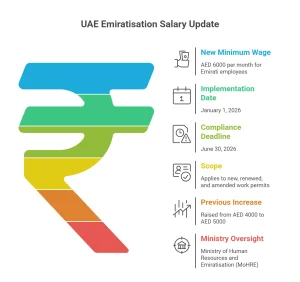
Emiratisation has long been a high priority in the UAE, and the latest policy for Emirati salaries is reflecting exactly that. Effective immediately from January 1, 2026, the Emirati minimum salary in the private sector is AED 6000 per month. Companies have been given enough time until 30 June 2026 to adjust the salaries of their employees to meet the new minimum wage this year. Your hiring plans, compliance checks, and Emiratisation targets should now be more considerate of this update.
In this guide, we cover what the latest Emirati minimum salary is, when it was announced, and what it means for your company’s recruitment strategy.
What Changed in 2026
The changes in salaries are a part of a phased approach. Previously, the minimum wages had been increased from AED 4,000 to AED 5,000 as part of the same strategy. Starting January 1, 2026, that strategy has entered the next phase with the Ministry of Human Resources and Emiratisation (MoHRE) announcing AED 6000 as the new minimum wage for Emirati employees in the private sector.
The new announcement also covers new citizen work permits issued from 1 January 2026. It also applies to work permits that are renewed or amended from that date onward. This means if you hired an Emirati before 2026, you are still required to adjust their salary and amend their contract before 30 June 2026.
Official MoHRE Announcement
In January 2026, the Ministry of Human Resources and Emiratisation confirmed a revised Emirati minimum salary requirement for private sector roles. The update applied nationwide and tied salary compliance more closely to Emiratisation targets.
Employers received formal guidance through MoHRE circulars issued in the first week of January, with direct instructions on payroll alignment and reporting. MOHRE has also clarified in a press statement that this new minimum wage for Emiratis in the private sector applies to new citizen work permits, as well as those being renewed or amended starting from 1 January 2026.
Key Dates and Grace Period
MoHRE has allowed employers time to adjust. Establishments that hired Emiratis before 1 January 2026 have been given until 30 June 2026 to update salaries and amend contracts. Employers have been given a short grace period to update contracts, payroll systems, and WPS records. By March 31, 2026, enforcement will begin in full.
Why the Increase
The increase in minimum wages of Emirati employees reflects their value in the UAE’s private sector workforce. As per MoHRE’s own website:
“[…] the strategy began with a minimum salary of AED 4,000, followed by AED 5,000, and now to AED 6,000 per month, effective as of 2026. This gradual adjustment is designed to reflect prevailing market wages based on the nature of the job, and to allow private sector establishments sufficient time to implement these staggered salary increases.”
Emiratisation Goals
UAE aims to have 10 percent of the private sector workforce made up of national talent by the end of 2026. When you offer a competitive Emirati minimum salary, you find it much easier to attract top-tier candidates who might have otherwise looked at government roles. It levels the playing field for your business and helps you secure the brightest minds in the region.
Competitive pay helps you retain local talent, supports long-term career growth, and reduces early turnover. Companies need to hire Emiratis, meet those quotas, pay them fairly, and keep their workforce growing. It’s one of the biggest win-win strategies we have seen in the UAE.
Minimum Salary for Emirati in Private Sector
UAE has set a federal minimum salary of AED 6,000 per month for Emiratis in the private sector, effective January 1, 2026, which has been increased from the previous minimum wage of AED 5,000.
Dubai Specific Rules
Dubai is also enforcing the AED 6,000 minimum wage for Emirati private sector workers starting January 1, 2026, as per federal MoHRE guidelines. Non-compliance will lead to risks of work permit suspensions and exclusion from Emiratisation quotas. That’s why firms must make sure the salaries they are paying meet this threshold for new, renewed, or amended permits.
Differences between Abu Dhabi and Sharjah
The announcement of AED 6000 as the minimum salary for Emiratis in the private sector applies to the entire UAE. The only difference might be that wages are probably already higher in Abu Dhabi due to it being the capital and the center for oil, gas, and large corporate headquarters.
It’s quite likely that your Abu Dhabi team already earns more. As for Sharjah, there might be a need for significant adjustment for wages in their manufacturing and logistics sectors.
Minimum Salary for Emirati in Dubai
Since Dubai is the center for international trade, hiring in Dubai will have you competing with global giants for the same local talent. Setting a strong minimum salary for Emirati employees in Dubai will help you stand out in a crowded market.
These are the updates to minimum salaries for Emiratis working in Dubai’s private sector, based on the latest MoHRE announcement:
Impact on Employers
If you aren’t complying with the new wages even past July 1, 2026, your underpaid Emirati employees will be disqualified from counting towards your fulfilled Emiratisation quotas. Moreover, new work permits will be suspended, and will not be issued for your company any longer.
Contract Amendment Step
You should follow these steps to amend contracts with the older wages:
- Identify every citizen on your payroll earning less than the new baseline.
- Draft an amendment to their current employment contract.
- You and your employee must sign this new document.
- Upload the changes through the MoHRE portal.
- Pay fees, provide documents like updated pay slips or bank statements
- Await electronic approval within 2 working days after verification.
Compliance and Penalties
What will happen if you don’t comply with these updates? If you haven’t adjusted the pay for your staff even by the deadline of 30 June 2026, you are in for serious consequences. Not only will your underpaid employees be excluded from your quota, but MOHRE will also suspend issuing your company new permits.
How to Adjust Salaries
You can easily adjust your workforce’s salaries by following these steps:
- Start with an internal audit.
- Review all active Emirati contracts.
- Compare listed salaries with current requirements.
- Update your payroll software to reflect the new AED 6,000 minimum.
- Communicate clearly with your staff about why their pay is increasing.
- Check if these changes affect your pension contributions with the GPSSA or the Abu Dhabi Pension Fund
Wage Protection System Integration
The Wage Protection System tracks every dirham you send to your employees. If it detects that an Emirati citizen is receiving less than the minimum salary for Emirati, it flags your file. These can lead to inspections or a freeze on your work permit renewals.
Conclusion
Emiratis are valuable in the UAE’s private sector workforce. Offering them competitive salaries that respect the minimum wage laws and updates shows you are providing them with real, stable, and competitive roles that actually matter. As an employer, the latest updates are your cue to improve existing hiring strategies and plan far ahead for Emiratisation.
At Emiratisation Nafis, we help you set up your WPS transfers so that every payment aligns perfectly with your registered contracts. In addition, we also work with many companies that are looking for Emiratisation-specific assistance and support. Contact us now for our services.
FAQs
What is the minimum salary for Emirati in the private sector in 2026?
The minimum salary for Emirati workers in the private sector in 2026 is AED 6,000.
Does the minimum salary for Emirati workers in Dubai differ?
The minimum salary for Emirati workers in Dubai is set by the same federal requirement.
What if the salary is below AED 6,000 now?
If an Emirati employee earns below AED 6,000, you need to amend the contract and adjust payroll immediately.
Does this apply to part-time Emiratis?
Part-time Emirati roles must still meet MoHRE guidelines based on registered working hours and contract type.
How does this affect Emiratisation quotas?
Salary compliance directly affects your Emiratisation score. Non-compliant salaries will result in Emirati hires not being counted toward your quota, which, in turn, will affect your overall rating and future hiring permissions.
